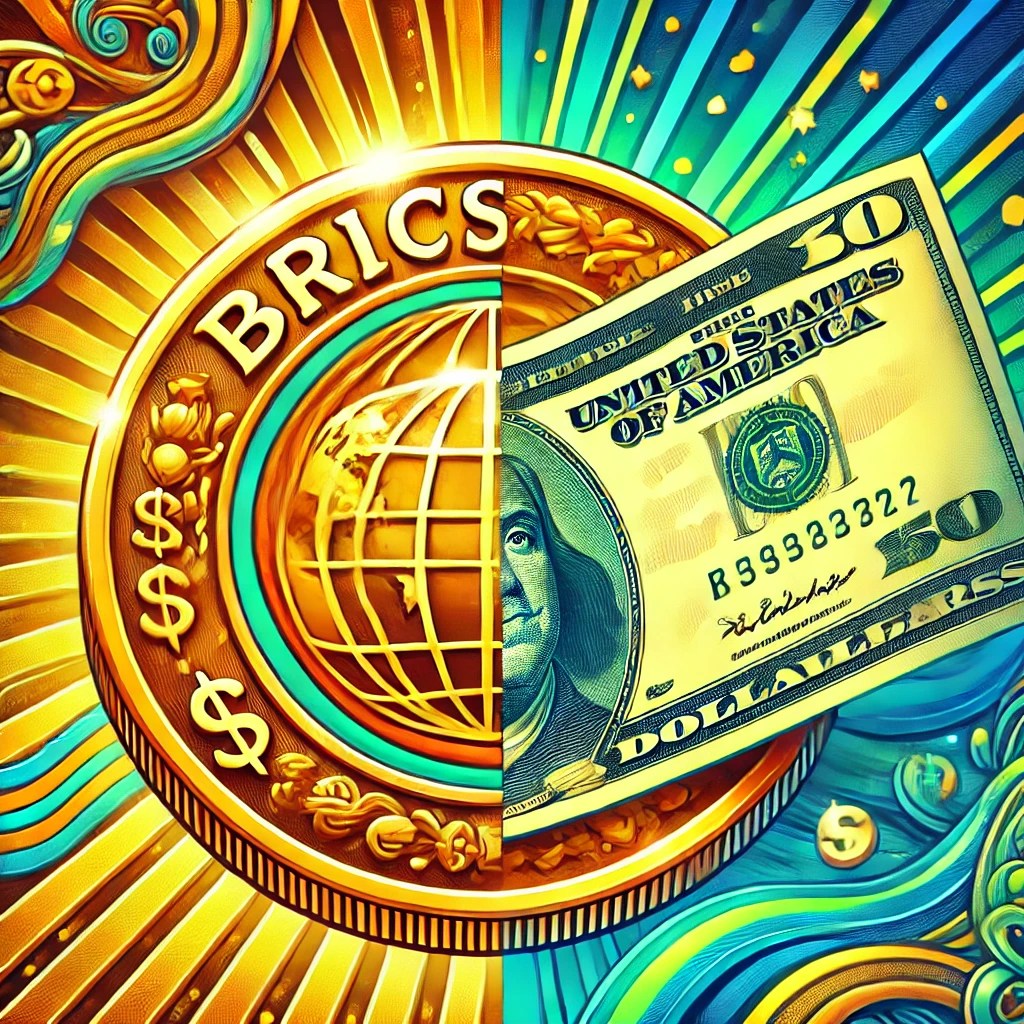
1. Backing by Gold and Rare Metals
- Gold Reserves: The BRICS nations collectively hold significant gold reserves. If the currency is fully backed by gold, its value would be tied to the global price of gold, which is currently around $2,000 per ounce (as of late 2024).
- Rare Metals: Adding rare metals (such as platinum, palladium, lithium, or rare earth elements) would further increase the intrinsic value of the currency. The pricing of these metals would depend on market demand, availability, and mining capacity within BRICS nations.
Example:
- If 1 unit of the BRICS currency were backed by a fixed amount of gold (e.g., 1/10th of an ounce), its value would approximate $200 at current gold prices.
2. Total Reserves and Currency Issuance
- The total amount of gold and rare metals held by BRICS nations determines how much currency can be issued.
- For example:
- If the BRICS nations hold a combined 30,000 metric tons of gold (~$1.9 trillion at $2,000/oz) and choose to issue currency equal to their reserves, each currency unit’s value would be based on the total reserve divided by the amount in circulation.
- A stricter backing (e.g., 100% gold-backed) would result in a higher price per unit compared to a fractional reserve model.
3. Exchange Rate Volatility
- Dollar Strength: The BRICS currency’s value against the dollar would depend on the dollar’s strength. If the U.S. dollar remains strong globally, the BRICS currency may face challenges in gaining a higher exchange rate initially.
- Demand for BRICS Currency: The currency’s adoption and use in global trade would directly impact its price. If large economies (e.g., BRICS members or trading partners) start settling trade in this currency, it could significantly increase its value.
4. Economic and Trade Dynamics
- De-dollarization: A gold-backed BRICS currency could gain value if countries begin to reduce reliance on the U.S. dollar for international trade.
- Market Confidence: The stability of the BRICS economies and the transparency of their backing system would influence global confidence in the currency, affecting its exchange rate.
5. Hypothetical Valuation Model
- If the BRICS nations issued a currency backed by gold and rare metals:
- Assume 1 BRICS unit is backed by 0.01 ounces of gold and a fixed amount of rare metals worth $50.
- At current market prices:
- Gold component = $20 (0.01 ounces at $2,000/oz).
- Rare metals component = $50.
- Total value = $70 per BRICS currency unit.
- However, this value could vary based on the underlying metal reserves and the exchange rate set by the issuing authority.
Potential Price vs. the Dollar
- Initial Price: If fully gold-backed, the price could align closely with the gold or metal reserves per unit (e.g., $50-$100 per unit).
- Future Growth: If widely adopted for trade and reserve holdings, the BRICS currency could appreciate, potentially challenging the dollar in international markets.
- Speculative Factors: If the currency gains significant adoption or if confidence in the U.S. dollar erodes, its value could rise further.
Challenges to Consider
- Limited Supply: A gold-backed currency would have limited issuance, which might restrict liquidity in global markets.
- Manipulation and Speculation: Speculative trading could lead to volatility.
- Adoption Resistance: Countries reliant on the dollar may be hesitant to adopt a new currency, limiting its initial impact.
In conclusion, the value of a BRICS currency backed by gold and rare metals would likely start close to the intrinsic value of its backing (e.g., $50-$100 per unit). Over time, its price against the dollar would depend on global adoption, trade dynamics, and geopolitical factors.



 Hypothetical Thinking
Leave a reply to mediarteducation Cancel reply