Analyzing Hypothetical Forces Behind Political Power Plays and Security Lapses Involving Donald Trump
Introduction:
In recent years, the term “Deep State” has gained prominence as a reference to an alleged coalition of powerful, unelected government and private sector elites who operate behind the scenes, influencing major policy decisions and maintaining a longstanding power structure in the United States. Hypothetically, if such a network exists, it could involve members across both political parties—Republicans and Democrats—who alternate power while pursuing common goals. If such a coalition were real, it might help explain the continued bipartisan backlash against figures like Donald Trump, who has challenged and disrupted the traditional political landscape. This article explores a hypothetical scenario where the Deep State could be influencing events involving Trump, including his security challenges, alleged assassination attempts, and the documented failures of the Secret Service to protect him effectively.
The Hypothetical Power Alliance:
Imagine a coalition of self-identified Republicans and Democrats, forged during the Bush Administration, who have shared and maintained political power over the years. Their alignment might not be about party loyalty but about preserving mutual interests in policies, stability, and long-standing relationships with specific industries. Hypothetically, their objective would be to maintain influence over key decisions, regardless of which party holds office.
This coalition, theoretically, would have a vested interest in ensuring stability in foreign relations, economic policies, and security matters. Trump’s rise, fueled by promises to disrupt the status quo and “drain the swamp,” posed a direct threat to this establishment. His outsider approach, stark rhetoric, and departure from traditional Republican policies may have risked destabilizing this coalition’s carefully maintained balance.
Resistance from Within: The Deep State Hypothesis and Anti-Trump Sentiments:
One of the visible effects of Trump’s challenge to the status quo was the backlash he faced from within the Republican Party. Several prominent Republicans expressed opposition, and some even openly resisted his leadership, which might seem unusual for a party typically united behind its leader. Under this hypothetical scenario, this resistance can be explained if some Republicans were part of the broader alliance—essentially aligning more closely with the coalition’s overarching interests than with Trump’s populist, nationalist, and unpredictable agenda.
If the Deep State were to view Trump as a threat, this resistance would naturally extend beyond mere political opposition, potentially translating into concrete efforts to impede his progress and restrict his influence through media narratives, investigations, and character defamation.
Secret Service Failures and Security Threats:
In this hypothetical context, the recent lapses in the Secret Service’s protection of Trump might also be seen as part of this ongoing resistance. Notable incidents, including assassination attempts at a rally in Pennsylvania and at Trump’s Florida residence, were met with notable Secret Service security lapses. The investigation into these incidents pointed to poor communication and a failure to follow established protective protocols, raising questions about the agency’s efficiency—or, hypothetically, even its motivations.
For proponents of the Deep State hypothesis, these lapses could be interpreted as symptomatic of a broader issue. The Secret Service, as part of the larger government structure, would theoretically fall under the influence of Deep State players. If some of these players opposed Trump, intentional neglect or administrative “errors” could hypothetically be a subtle means of allowing security breaches or increasing vulnerabilities around him. While such a suggestion lacks hard evidence and is, at this stage, pure speculation, it aligns with the notion of a hidden power structure resistant to Trump’s influence.
The Media’s Role and the Information Landscape:
In a scenario where the Deep State aims to undermine Trump, the media might serve as a powerful tool in this strategy. A consistent stream of negative coverage, combined with frequent investigations and political criticism, could hypothetically work to sway public opinion. By painting Trump in a consistently negative light, the media could theoretically reinforce the Deep State’s objective to undermine his authority, bolster opposition, and sustain doubts about his credibility.
For those who subscribe to the Deep State hypothesis, the media’s focus on Trump’s controversies and the omission of certain other politically sensitive topics indicate a potential bias. This selective reporting could, in this view, be seen as part of an orchestrated strategy designed to shape public perception and favor narratives that align with the hypothetical coalition’s interests.
Possible Repercussions of the 2024 Election:
Trump re-entering office poses an even greater threat to these alleged power structures. His return would empower his administration to investigate and potentially dismantle elements he considers aligned with the Deep State. This could mean revisiting security protocols, investigating agencies’ actions, and targeting officials he views as complicit. For members of this hypothetical alliance, a Trump presidency could lead to exposure or retribution, fundamentally altering the dynamics of Washington.
Conversely, if the election were to result in a more traditional candidate’s victory, this coalition could continue operating within a familiar framework, preserving shared policies and long-standing alliances. Their influence would likely remain intact, potentially giving them another opportunity to solidify their positions and retain their policy agenda, free from the disruption Trump represents.
The idea of a Deep State and a bipartisan coalition working covertly to maintain power is a compelling hypothetical scenario that sparks considerable debate. Unexplained events, security failures, and certain political dynamics keep the discussion alive. Whether fact or fiction, this hypothesis sheds light on concerns about transparency and accountability in government institutions. As public trust in government and media continues to waver, the Deep State theory serves as both a cautionary tale and a call for greater transparency in the corridors of power.
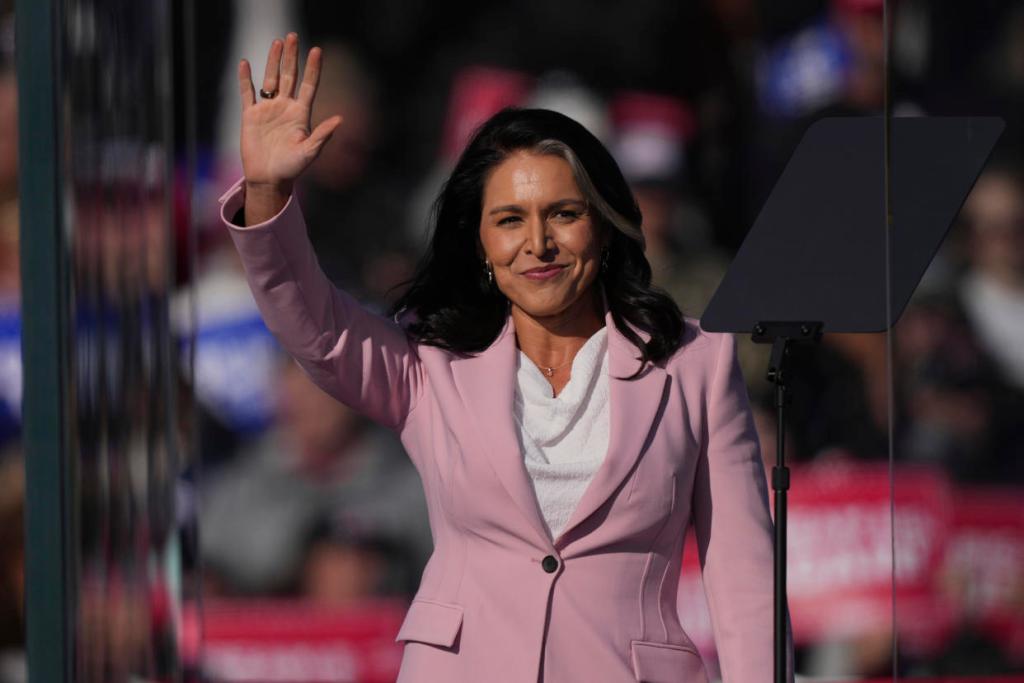
Trump choice for the CIA
Tulsi Gabbard has a multifaceted background as a politician, military veteran, and activist. Here’s an overview of her journey:
- Early Life and Education:
Born on April 12, 1981, in Leloaloa, American Samoa, Tulsi Gabbard was raised in Hawaii, where her family eventually settled. Her upbringing was influenced by a mix of Hindu and Christian beliefs, and she has consistently identified as Hindu. Gabbard attended Hawaii Pacific University, earning a degree in Business Administration. - Military Service:
In 2003, Gabbard joined the Hawaii Army National Guard and later served two tours in the Middle East, including a deployment to Iraq. Her military service, particularly in a combat zone, became a defining part of her identity and political career. She continues to serve as a major in the Army National Guard. - Political Career:
- Hawaii House of Representatives: At age 21, Gabbard became the youngest woman ever elected to the Hawaii House of Representatives, serving from 2002 to 2004.
- Honolulu City Council: After her first deployment, she served on the Honolulu City Council, working on issues like infrastructure and community development.
- U.S. Congress: Gabbard represented Hawaii’s 2nd Congressional District from 2013 to 2021, becoming one of the first Hindu and Samoan Americans elected to Congress. In Congress, she gained attention for her focus on foreign policy, particularly her opposition to regime-change wars. She served on the House Foreign Affairs, Armed Services, and Financial Services committees.
- Presidential Run: Gabbard ran for the Democratic presidential nomination in 2020, advocating for a non-interventionist foreign policy. Her campaign highlighted anti-establishment themes, and she often criticized both Democratic and Republican leaders for supporting what she saw as counterproductive foreign interventions.
- Political Views:
Known for her independent stance, Gabbard often takes positions that cross traditional party lines. While she initially aligned with the Democratic Party, she has increasingly positioned herself as a critic of both major parties. She has been vocal on issues like veterans’ rights, criminal justice reform, environmental protection, and religious freedom. In 2022, she formally left the Democratic Party, citing differences with the party’s direction and policies. - Media and Public Influence:
Since leaving Congress, Gabbard has become a prominent political commentator and occasionally appears as a guest on conservative media outlets. She continues to advocate for policies rooted in non-interventionism, government accountability, and civil liberties, often challenging mainstream narratives.
Tulsi Gabbard’s unique mix of military experience, independence, and critique of establishment politics has made her a distinctive and sometimes polarizing figure in American politics.
My Opinion.
If Tulsi Gabbard were to become CIA Director, it would bring an unusual combination of military experience, non-interventionist views, and a strong independent streak to the agency’s leadership. Here’s a breakdown of potential impacts:
- Foreign Policy Approach:
Gabbard’s non-interventionist stance might lead to a reshaping of CIA operations to prioritize intelligence-gathering over interventionist activities. This shift could lead to a reduction in covert operations aimed at regime change and more focus on intelligence support for diplomatic efforts and counterterrorism. She would likely emphasize a foreign policy centered on national security without deep entanglements in foreign conflicts, which might mean a restrained approach toward foreign interventions. - Transparency and Accountability:
Known for challenging the political establishment, Gabbard might push for greater transparency within the CIA. While full transparency is challenging given the agency’s sensitive work, her leadership could focus on increasing accountability, both internally and in its relations with other government branches. She may aim to ensure that the agency operates under strict oversight and adheres more closely to its foundational mandate. - Agency Morale and Culture:
Gabbard’s outsider status could create tension within the CIA, particularly with personnel who have served under a different operational doctrine. Her potential questioning of certain practices, especially any that appear to favor interventionism, might lead to resistance among career intelligence officials. However, her military background could help bridge the gap, as she understands security priorities and the complexity of intelligence work. Over time, her unique approach might even attract new talent with fresh perspectives on security and intelligence. - Relationship with the Military and Other Agencies:
With her background in the military and her non-traditional views, Gabbard might foster closer collaboration between the CIA and military intelligence branches, focusing on counterterrorism and anti-insurgent operations rather than direct interventions. Her presence could also bring a sense of mission realignment, encouraging other intelligence agencies to focus on areas that align more with an overall strategy of defense rather than offense. - Global Perception and Diplomacy:
Gabbard’s leadership could positively impact global perceptions of the CIA, as her approach might be seen as more restrained and principled. Allies and adversaries alike might view her directorship as an indication of a less interventionist and more diplomatic U.S. stance. This shift could alter international relations, fostering partnerships based on intelligence collaboration rather than purely operational assistance in regime-change missions. - Domestic Political Reactions:
Gabbard’s appointment would likely spark polarized reactions in U.S. politics. Her critics, particularly within traditional national security circles, may argue that her non-interventionist views are incompatible with the CIA’s traditional operations. Conversely, her supporters could view her appointment as a refreshing shift toward a more balanced and principled intelligence approach.
As CIA Director, she would be a bold and unconventional choice, likely leading to a re-calibration of the agency’s priorities toward intelligence-gathering and counter terrorism, with less emphasis on interventionist activities. Her leadership would face significant challenges in reshaping the agency’s internal culture but could result in a more focused and, perhaps, diplomatically oriented CIA.





 Hypothetical Thinking
Leave a reply to katharineotto Cancel reply