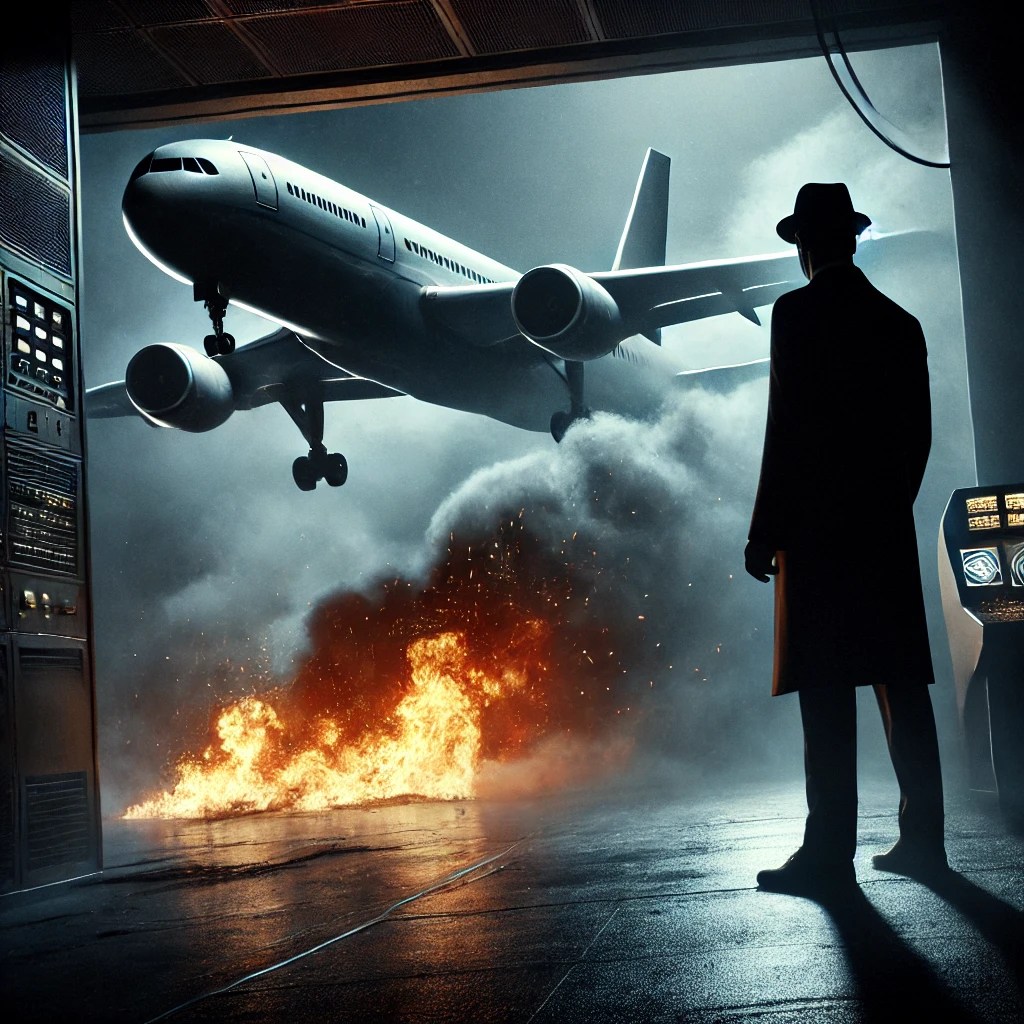
Examining Possible CIA Involvement
In recent months, a disturbing pattern of aviation accidents has emerged worldwide, raising questions about their causes and potential hidden motives. While tragic mishaps in air travel are not uncommon, the sudden spike in incidents—particularly since December 2024—has led some to wonder whether these events are more than mere coincidences. Could these disasters be serving as a distraction from larger geopolitical or domestic developments? And is there a possibility that intelligence agencies, such as the CIA, are involved in influencing public focus?
A Surge in Aviation Incidents
Since late 2024, multiple high-profile air disasters have occurred in rapid succession:
- December 29, 2024: Jeju Air Flight 2216 crashed during landing at Muan International Airport in South Korea, resulting in 179 fatalities.
- January 29, 2025: A mid-air collision over Washington, D.C., between a U.S. Army helicopter and an American Airlines flight led to 67 deaths.
- February 6, 2025: Bering Air Flight 445 crashed in Alaska, killing all 10 occupants.
- March 2025: A Delta Air Lines aircraft overturned upon landing at Toronto Pearson International Airport, injuring 21.
While each incident is officially under investigation, their timing raises suspicions. The question is: Why now? What is happening behind the scenes that might require a shift in public attention?
Historical Precedents: The CIA and Distraction Tactics
The CIA has a well-documented history of using distractions, misinformation, and media manipulation to steer public perception. Some key examples include:
- Operation Mockingbird (1940s-1970s): A covert operation where the CIA influenced major news outlets to control narratives and deflect from sensitive government actions.
- The Gulf of Tonkin Incident (1964): A falsified naval confrontation was used to justify the U.S. entering the Vietnam War.
- Iran-Contra Scandal (1980s): While illegal arms sales were exposed, media distractions were used to downplay the severity of the revelations.
- Post-9/11 Policy Shifts: Fear from the attacks was leveraged to pass sweeping surveillance laws, with minimal scrutiny due to the ongoing tragedy.
Given these historical precedents, the idea that recent aviation disasters could be part of a broader intelligence operation is not far-fetched. The question remains: What is happening that might necessitate such a distraction?
Potential Underlying Motives
Several major domestic and international events could be cause for concern among intelligence agencies and political figures:
- Economic Instability & Market Shifts – The U.S. and global economies are experiencing downturns, inflationary pressures, and major banking crises. Could these incidents be redirecting public focus away from financial turmoil?
- Political Transitions & Power Struggles – With the return of Donald Trump to office, there are increased tensions regarding policy changes, border security, and foreign relations. Is the media focusing on aviation accidents to avoid critical analysis of new governmental shifts?
- Foreign Cyber Warfare & Electronic Disruptions – Reports indicate an increase in electronic warfare tactics affecting flight navigation systems. Could these incidents be the result of state-sponsored cyberattacks, which intelligence agencies prefer to keep hidden?
- Classified Military Operations – Covert military actions often occur under the radar, with major distractions preventing widespread public scrutiny.
Examining the Evidence for Possible Intelligence Involvement
While there is no definitive proof that the CIA or another intelligence agency is directly orchestrating these aviation events, certain factors point toward the possibility:
- Timing: The clustering of accidents immediately after a major political shift.
- Media Coverage Patterns: Hyper-focus on aviation mishaps while other pressing issues are underreported.
- Past Use of Similar Tactics: Historical evidence of intelligence agencies influencing public perception through tragic or shocking events.
- Potential for Cyber Interference: Growing concerns about electronic warfare affecting aviation raise questions about whether these are engineered disruptions.
Conclusion: An Urgent Need for Transparency
If these aviation disasters are being used to distract the public from more pressing issues, the implications are severe. The public deserves transparency, independent investigations, and accountability. The key questions remain:
- Are these crashes merely coincidental, or is there an unseen force manipulating events?
- Who benefits from the distraction?
- Are intelligence agencies involved in shaping media narratives to deflect attention?
Until these questions are adequately addressed, skepticism is warranted. In an era where public trust in institutions is already eroding, these incidents serve as a reminder to remain vigilant, question mainstream narratives, and demand the truth.
It is worth analyzing the actions of Deep State!


 Hypothetical Thinking
Leave a comment