What If the U.S. Declared War on the Cartels? A Look at Ending Organized Crime in a Corrupt System
Introduction
For decades, Mexican drug cartels like the Sinaloa and Jalisco New Generation Cartel have operated with impunity, growing into powerful transnational organizations. Despite efforts from Mexican law enforcement and military, the cartels continue to flourish, largely due to systemic corruption within the Mexican government. High-ranking officials, local law enforcement, and even military elements have been compromised, making the fight against cartels nearly impossible within Mexico’s current framework.
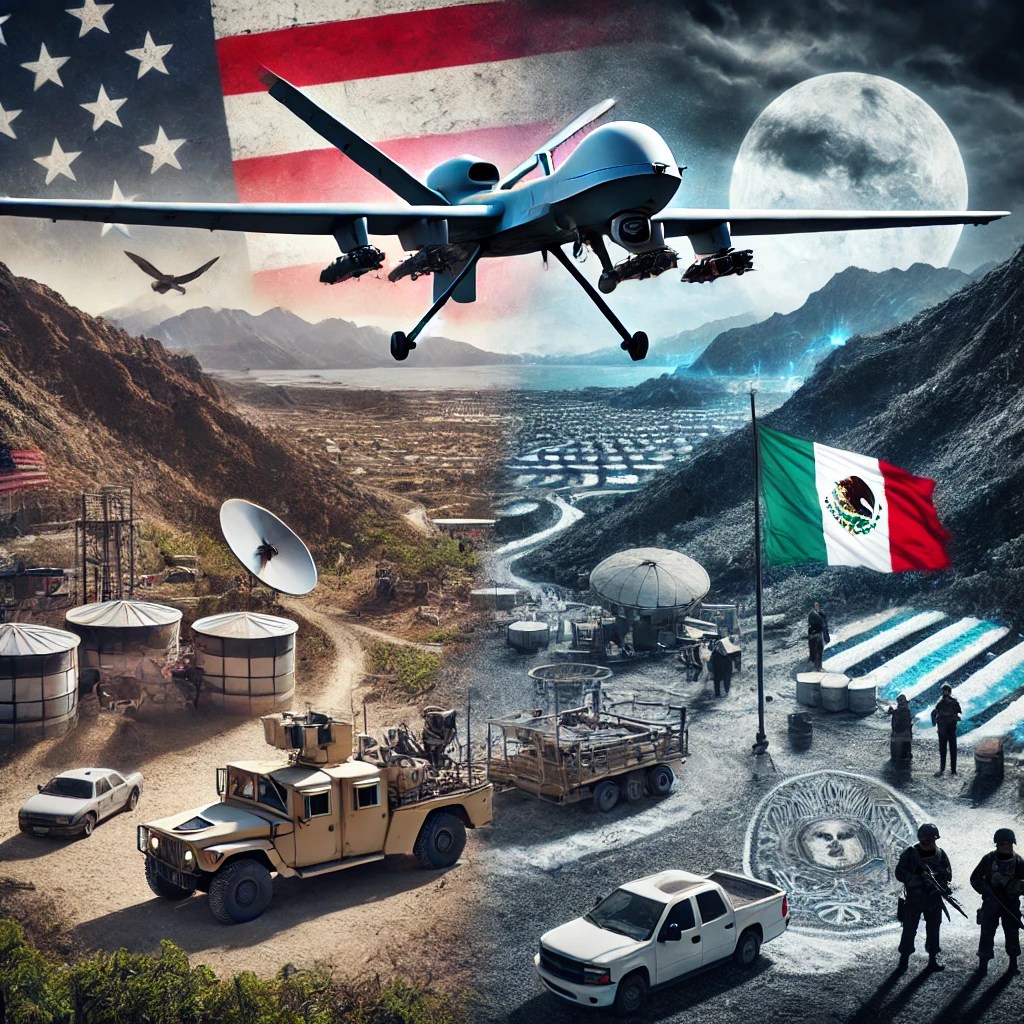
This raises a hypothetical but compelling question: What if the United States used its strategic forces to unilaterally terminate cartel operations? In a world where Mexican governance is deeply infiltrated by cartel interests, could the U.S. dismantle these criminal empires through direct military and intelligence action?
1. Intelligence: The Foundation of the Offensive
Before any operation could begin, intelligence gathering would be paramount. The U.S. would deploy satellites, drones, and SIGINT (signals intelligence) resources to map cartel operations thoroughly. Human intelligence (HUMINT) operatives could infiltrate cartel networks, leveraging information from defectors and rival groups.
Given the Mexican government’s corruption, cooperation would be minimal or non-existent. U.S. agencies like the CIA and DEA would likely operate covertly within Mexican borders, bypassing compromised Mexican intelligence agencies. Advanced cyber warfare tools would disrupt cartel communications while gathering critical data.
2. Direct Military Intervention: Precision and Power
A large-scale offensive would likely involve Special Operations Forces (SOF)—Navy SEALs, Delta Force, and Army Rangers—conducting high-stakes raids to capture or eliminate cartel leadership. These HVT (High-Value Target) missions would aim to decapitate the cartels by removing key leaders like the heads of the Sinaloa or Jalisco New Generation Cartels.
Drone strikes would be another crucial tool, targeting drug labs, safe houses, and heavily guarded compounds. Strategic airstrikes from F-35s or even bombers could take out cartel infrastructure in remote areas.
However, given the cartels’ deep integration into civilian populations and urban areas, collateral damage would be a significant risk, potentially leading to humanitarian crises and international backlash.
3. Cyber and Electronic Warfare: Crippling the Cartels from Within
With the Mexican government’s corruption limiting ground-based efforts, cyber warfare would play a crucial role. U.S. cyber units could hack into cartel financial networks, exposing illicit transactions and freezing accounts. Electronic warfare systems would jam cartel communications, leaving their operatives blind and deaf during key operations.
Imagine entire trafficking routes thrown into chaos because cartel convoys can no longer coordinate. Combine that with real-time intelligence from drones, and the U.S. could decimate supply chains without ever stepping foot on the ground.
4. Securing the Borders: The Final Chokehold
On the U.S. side of the border, National Guard units and enhanced surveillance would clamp down on any remaining trafficking routes. Advanced radar, drones, and automated surveillance systems would ensure that drugs, weapons, and cartel operatives have no escape.
At the same time, domestic law enforcement—led by the DEA and FBI—would dismantle cartel networks operating within the U.S. These cells, often responsible for distribution and money laundering, are critical nodes in the cartel empire.
5. Economic and Legal Warfare: Hitting Where It Hurts
The U.S. could also target the cartels through economic means. Using global sanctions and anti-money laundering laws, the Treasury Department could seize cartel assets worldwide. Banks and shell companies complicit in laundering drug money would be shut down.
This would further isolate the cartels, cutting off their financial lifelines and making it harder for them to fund operations, bribe officials, or pay their vast armies of foot soldiers.
6. Diplomatic Fallout: The Cost of Going Alone
A unilateral military campaign would not come without consequences. The Mexican government—already compromised and deeply embarrassed—would likely denounce the operation, calling it a violation of sovereignty. Relations between the two countries would plummet, and international criticism would pour in from nations opposed to such aggressive action.
Yet, for many, the ends might justify the means. A weakened, disoriented cartel network could save thousands of lives on both sides of the border, especially as fentanyl and methamphetamine continue to devastate American communities.
7. Potential Risks: Creating a Power Vacuum
The most significant risk of such an operation? A power vacuum. Cartels have become so entrenched in Mexican society that dismantling them without a plan for what comes next could lead to total chaos. Rival gangs could emerge, local militias might fill the void, and widespread violence could spiral out of control.
Moreover, with the Mexican government unable—or unwilling—to step in effectively, the U.S. might face calls to maintain a military presence in Mexico, leading to a drawn-out conflict similar to the post-invasion phase in Iraq.
8. Long-Term Solutions: Beyond the Military Campaign
If the U.S. truly wanted to eradicate cartel influence, military intervention alone wouldn’t be enough. A post-conflict strategy would need to focus on:
- Rebuilding Mexican institutions free from cartel influence.
- Strengthening local law enforcement with vetted, anti-corruption measures.
- Investing in economic development to reduce the poverty that fuels cartel recruitment.
- Reducing U.S. drug demand through public health campaigns, education, and rehabilitation programs.
Conclusion: Is It Worth the Price?
Dismantling the Mexican cartels through U.S. strategic force is a bold and aggressive idea. It could, in theory, end decades of violence, drug trafficking, and corruption. But the human, political, and economic costs would be enormous.
In a world where the Mexican government is too corrupt to act, the responsibility to address cartel violence might fall to the United States. But as history has shown in Iraq and Afghanistan, military might alone can’t fix deep-seated corruption and social decay.
Ending the cartels would require not just bullets and drones—but a commitment to rebuilding what’s been broken for decades.



 Hypothetical Thinking
Leave a comment