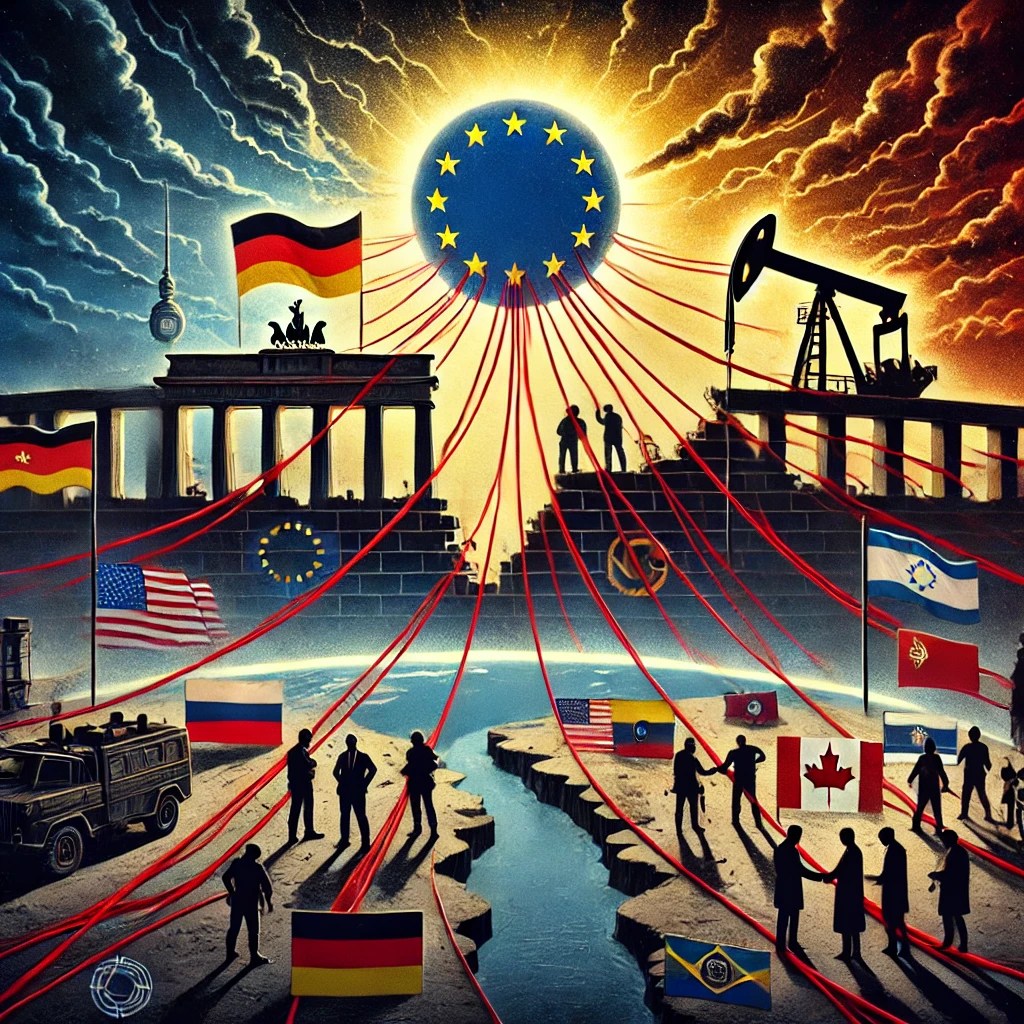
A Hypothetical Global Shift Toward Progressive Socialism
November 9, 1989—the world watched as the Berlin Wall, a symbol of Cold War division, came crashing down. For many, it marked the end of the ideological battle between capitalism and communism. But what if it wasn’t the end? What if it was merely the beginning of a carefully orchestrated plan that has shaped global politics over the past three decades? A plan to unify Europe, infiltrate the Americas, and promote a progressive liberal movement that, beneath its surface, mirrors the authoritarian control mechanisms we thought we’d left behind.
This article explores a hypothetical scenario where a covert strategy—possibly originating from a Soviet-German accord—allowed the reunification of Germany, the creation of the European Union, and a global spread of socialist ideologies under the facade of progressive liberalism.
1. The Fall of the Wall and the Rise of a New Europe
The fall of the Berlin Wall wasn’t just about freedom—it was about restructuring Europe. Germany’s reunification in 1990 was seen as a victory for democracy, but in this scenario, it was also a calculated move to lay the groundwork for a unified Europe.
The Maastricht Treaty of 1992 formalized the creation of the European Union, establishing an economic and political alliance that transcended national borders. The EU’s consolidation of power, central banking systems, and regulatory frameworks may have been part of a grander plan to create a superstate—one that promoted socialism under the guise of liberal democracy. The repatriation of German gold reserves might have served as a financial pillar for this emerging entity, stabilizing its economy and empowering its influence on the global stage.
2. Exporting Ideologies: The Influence on South America
With Europe unified, the next logical step was exporting ideologies. South America, rich in natural resources and fraught with political instability, became fertile ground for socialist movements.
- NGOs from Europe flooded into countries like Venezuela, Bolivia, and Ecuador, promoting socialist ideas under the banner of humanitarian aid.
- Hugo Chávez’s Venezuela (1999) became the cornerstone of this movement, using vast oil reserves to fund socialist projects across Latin America. The Bolivarian Revolution wasn’t just about Venezuela—it was about creating an anchor nation that could finance a regional shift to socialism.
- Regional alliances like UNASUR and ALBA emerged, promoting unity under socialist principles, challenging U.S. influence in the region.
Leaders like Lugo (Paraguay), Lula (Brazil), Bachelet (Chile), Evo Morales (Bolivia), and Correa (Ecuador) rose to power, pushing leftist policies that aligned with this broader ideological wave.
3. The North American Front: Obama, Trudeau, and AMLO
If South America was the ideological laboratory, North America was the ultimate prize.
- Barack Obama’s presidency (2008-2016) marked a turning point for the U.S. His policies on healthcare, global diplomacy, and social reform shifted the nation toward progressive ideals. Under this hypothesis, Obama was a key figure in softening the U.S.—reducing its global dominance and making it more amenable to globalist agendas.Many argue that Joe Biden’s presidency is simply a continuation of Obama’s legacy. With former Obama officials filling Biden’s cabinet, the ideological consistency is hard to ignore. The Biden administration’s focus on climate change, social justice, and global cooperation aligns closely with Obama-era policies, leading some to call it “Obama’s third term”.
- Justin Trudeau in Canada furthered this ideological front. Allegations—though unproven—about his potential familial ties to Fidel Castro have fueled theories that Trudeau is ideologically aligned with socialist principles. His progressive policies, focus on climate initiatives, and strict state control (especially during the COVID-19 pandemic) fit into this hypothetical globalist strategy.
- Mexico’s AMLO (Andrés Manuel López Obrador), elected in 2018, bolstered this ideological axis from the south. AMLO’s focus on nationalism and state-controlled energy dovetails with the socialist framework emerging in Latin America.
4. The Continuity Hypothesis: Obama to Biden
The idea that Joe Biden’s presidency represents a direct continuation of Obama’s administration has been widely discussed.
- Personnel Overlap: A significant number of Biden’s staff are former Obama officials. In the early months of Biden’s presidency, roughly 75% of his top aides were Obama-era veterans.
- Policy Parallels: Both administrations emphasized wealth redistribution, social programs, and a globalist foreign policy that prioritized multilateralism.
- Cultural and Ideological Shifts: Obama and Biden’s presidencies have overseen significant cultural transformations in the U.S., promoting progressive ideals that some argue erode traditional American values in favor of globalist policies.
Even though Biden has denied running an “Obama third term,” the ideological and operational continuity is hard to dismiss.
5. Toward a Global Socialist Framework?
In this hypothetical scenario, the ultimate goal would be to dismantle national sovereignty and replace it with a global governance system under progressive socialist ideals. Here’s how that might look:
- Europe serves as the model, with its centralized bureaucracy and economic integration.
- South America provides the ideological fervor and resource base (through countries like Venezuela) to finance socialist movements.
- North America—through the U.S., Canada, and Mexico—represents the final frontier. By aligning the U.S. with this global strategy, traditional bastions of freedom and capitalism would give way to a unified, global socialist framework.
6. Final Thoughts
While this is a hypothetical scenario, it raises important questions about global power dynamics, ideological shifts, and the subtle ways in which progressive liberalism may mirror past authoritarian systems. Is the modern world moving toward a centralized, globalist system under the guise of democracy and social justice? And if so, where does that leave individual freedom, national sovereignty, and traditional values?
Only time will tell.




 Hypothetical Thinking
Leave a comment