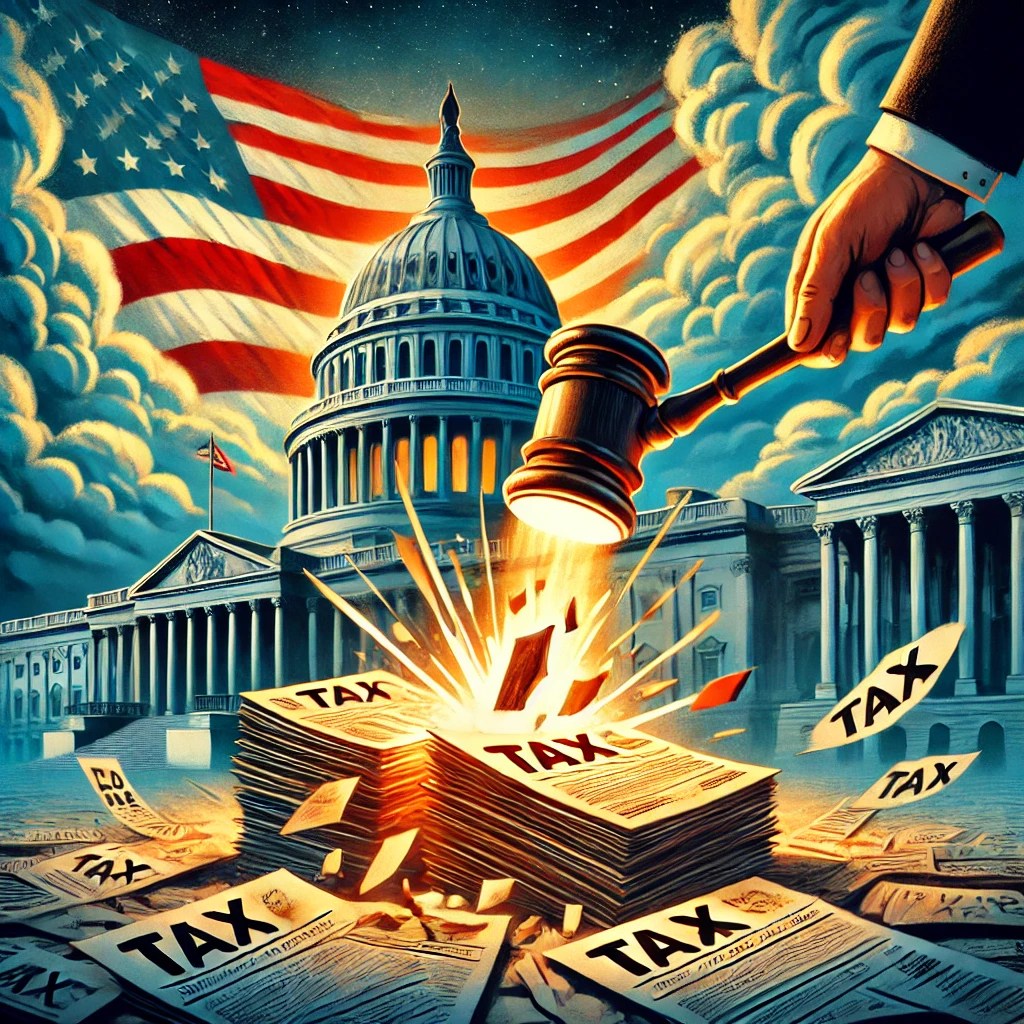
If Trump successfully abolishes federal taxation, the political repercussions for his successors would be profound and far-reaching. Here’s a breakdown of the likely outcomes:
1. Legacy of Trump
- Hero to His Base: Trump would be immortalized as a revolutionary leader who dismantled one of the most entrenched systems of government control. This would solidify his status as a transformative figure in U.S. history.
- Political Benchmark: Every future president, especially Republicans, would be compared to his boldness in restructuring government operations. His successors would face pressure to maintain or expand on his policies.
2. Immediate Impact on Successors
- Challenge of Governance:
- Future presidents would inherit a federal government with drastically reduced or alternative revenue streams. They would face immense pressure to manage federal programs effectively without traditional income tax revenue.
- Limited Scope for New Taxes: Successors would struggle to reintroduce federal income taxation due to the political capital Trump would have built with his supporters and the precedent he set. Attempting to reverse his policy could be politically suicidal.
3. Economic Outcomes
- If Successful:
- A thriving economy under an alternative funding model (e.g., tariffs, national sales tax) would set a high bar for successors. They would need to ensure continuity and avoid being seen as reversing progress.
- If Unsuccessful:
- Economic disruptions, inflation, or budget deficits could be blamed on Trump’s tax abolition, but successors would bear the burden of fixing the fallout, risking their political careers in the process.
4. Polarization and Political Realignment
- Deepening Divides:
- Trump’s bold move would further polarize the electorate. Supporters would see it as a triumph of individual liberty, while critics might view it as reckless and damaging.
- Realignment of Political Ideologies:
- Abolishing taxation could redefine the Republican platform, forcing future GOP leaders to embrace smaller government as a non-negotiable principle.
- Democrats might double down on advocating for restoring federal taxes to fund traditional programs, potentially alienating moderate voters.
5. Public Perception of Government
- Increased Distrust of Taxation:
- The abolition of federal taxes would likely deepen public skepticism of taxation as a concept, making it harder for future administrations to justify new taxes.
- Empowerment of States:
- With reduced federal funding, states might gain more control over revenue generation and programs, reshaping the federal-state power dynamic. Future presidents would have to navigate a decentralized system.
6. Global and Geopolitical Implications
- America’s Economic Model:
- If Trump’s plan works, it could inspire other nations to consider similar approaches. However, if it leads to economic instability, it might damage America’s global standing, leaving successors with weakened influence abroad.
- Trade Relations:
- A tax system relying heavily on tariffs could create diplomatic challenges for Trump’s successors, especially if trade partners retaliate. Rebuilding alliances might be difficult.
7. Successors’ Political Strategy
- Republicans:
- GOP successors would likely embrace Trump’s policies, at least rhetorically, to maintain his base’s support.
- Democrats:
- Successors from the Democratic Party might campaign on restoring some form of taxation to fund expanded federal programs, but they would need to navigate public resistance to higher taxes.
Conclusion:
Trump abolishing federal taxation would create a seismic shift in American politics. For his successors, the political landscape would either solidify his legacy as a transformative leader or burden them with fixing potential fallout. Regardless of the outcome, the abolition of taxes would reshape the role of the federal government, the dynamics of political campaigns, and public expectations for decades to come.




 Hypothetical Thinking
Leave a comment