Prologue
It was the eve of a new millennium. The world watched the Middle East with a calculated gaze, not just for its geopolitical implications but for the oceans of black gold beneath the sands. At the highest echelons of power, a shadowy cabal formed, converging from Washington, London, and corporate boardrooms scattered across the globe. Their goal? Control of Iraq’s vast oil reserves, a prize they’d long coveted but had no justifiable means to seize—until now.
Act I: The Whispered Pact
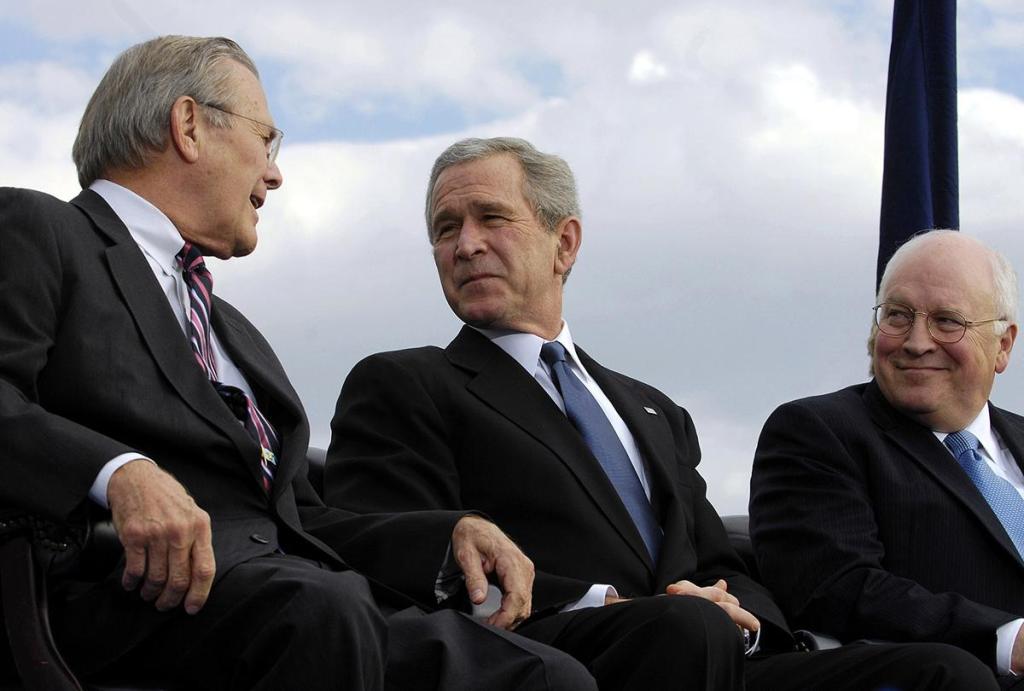
The players were familiar faces—George W. Bush and his steely Vice President, Dick Cheney, along with their closest confidants in the UK: Prime Minister Tony Blair and the executives of the most powerful oil companies. They had danced around this issue for years, bound by the corporate interests that laced the very veins of their administrations. From Halliburton to British Petroleum, oil magnates whispered their demands: the overthrow of Saddam Hussein was essential, and the control of Iraq’s oil would be their reward.
But such an aggressive act could not be justified to the world without the proper pretext. And so, a plan began to form, shrouded in the secrecy of state dinners, private jets, and secured conference calls.
Act II: The Convenient Tragedy
As 2001 dawned, tensions in the Middle East simmered, but there was no clear path to Iraq. Bush’s administration had been eager to target Saddam from the start, but the world demanded more than ambition—they demanded a reason.
Then came September 11th, 2001, the day the world stood still as terror struck the heart of America. But in the chaotic aftermath, as the rubble of the Twin Towers still smoldered, an opportunity emerged. While the official narrative pointed the finger at Al-Qaeda, a quiet ripple began to work through Washington. Cheney, ever the opportunist, saw his opening.
“We need to shift focus,” he told Bush in a closed-door meeting. “This is our chance.”
Iraq’s connection to the attack was tenuous at best, but that didn’t matter. Behind closed doors, the decision was made: 9/11 would serve as the pretext. It was a tragedy too perfect to waste. As Americans wept and raged, Cheney and Bush moved their pieces on the chessboard.
Act III: The Bipartisan Bargain
But Bush could not act alone. The stakes were too high, the political landscape too delicate. He needed bipartisan support, and he found willing partners across the aisle. Leading Democrats—Hillary Clinton, Joe Biden, John Kerry—were briefed on the intelligence, lured by the promise of unity and the facade of protecting America from further harm.
They had their reservations—after all, where was the evidence of weapons of mass destruction? But fear was a powerful motivator, and the oil interests were not limited to Republicans. The Democratic establishment had deep ties to the same corporate forces that funded their campaigns. These forces whispered behind closed doors: “Iraq is key.”
A deal was struck. The Democrats would support the war, though some would later claim they were misled. In truth, the chance to solidify America’s control over the Middle East’s energy reserves was too tempting for any politician, Democrat or Republican, to ignore.
Act IV: Across the Pond
Meanwhile, across the Atlantic, Tony Blair was locked in his own struggle. British Petroleum, Shell, and other major UK players had their eyes on Iraq for years. Blair, eager to maintain the UK’s “special relationship” with the U.S., knew his legacy was at stake. He had been briefed by MI6—the WMD claims were shaky at best. But like Bush, Blair was unwilling to let this golden opportunity slip through his fingers.
In the infamous “Downing Street memo,” Blair was warned that the case for WMDs was flimsy, but he forged ahead, aligning his government with Bush’s plan. The stage was set. The two nations would march into Iraq under the banner of fighting terror and eliminating the phantom threat of WMDs.
Act V: The Oil Barons’ Feast
The war unfolded with a precision that stunned the world. Saddam Hussein’s regime fell, and as Baghdad burned, oil executives watched with glee. In the years that followed, contracts were awarded to companies like Halliburton, ExxonMobil, and British Petroleum, all securing lucrative stakes in Iraq’s energy future.
Iraq’s vast oil reserves, once under the control of a despised dictator, now lay open to Western corporations. The real goal had been achieved, masked by the rhetoric of spreading democracy and eliminating WMDs. In truth, it was oil that had motivated the war, and the corporate interests that stood to gain had never been clearer.
Act VI: The Unraveling
But the plot could not remain hidden forever. As the occupation dragged on and no WMDs were found, cracks began to show. Tony Blair, once revered, faced a public backlash that nearly destroyed his political career. The Chilcot Inquiry in the UK exposed the failures and misrepresentations of the intelligence used to justify the war. Bush’s approval ratings plummeted, and the war that was supposed to secure American dominance in the Middle East turned into a quagmire.
Yet, despite the political fallout, the oil magnates had what they wanted. Iraq’s oil was theirs, its markets opened for exploitation. The cost in human lives and political careers was merely collateral damage in the grand scheme of global energy control.
Epilogue
Years later, as new political winds blew across Washington and London, the players involved distanced themselves from the Iraq War. Cheney, Bush, and Blair would go on to defend their decisions, claiming it was all for the greater good. But those who looked deeper saw the truth: it had never been about WMDs or democracy.
It was always about the oil.
And as the world’s eyes turned to new crises, the question remained: how many other tragedies had been manufactured, how many other decisions made in smoky rooms, for the sake of oil and power?
The real answer was buried beneath layers of political rhetoric, hidden behind the façade of democracy and freedom—but those in power knew. They had always known.
 Hypothetical Thinking
Leave a comment