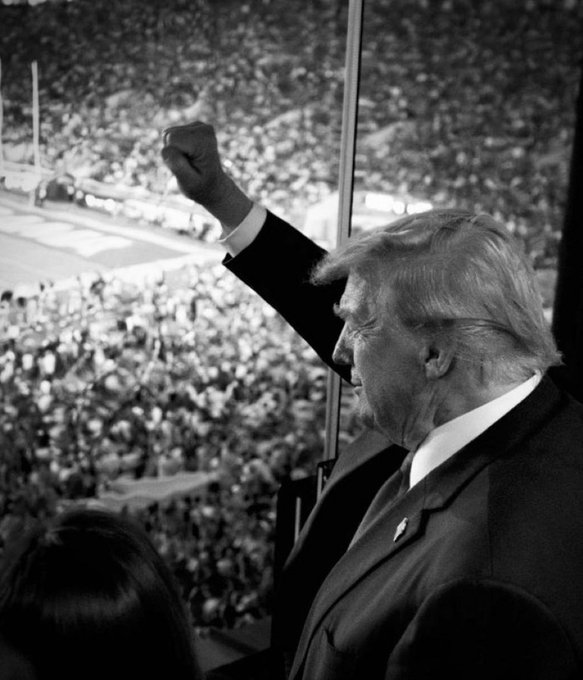
Imagine a scenario in which the Bush administration, along with elements of the Democratic Party, had secretly colluded to orchestrate or cover up events leading to the Iraq War. If, hypothetically, this conspiracy extended to either participating in or allowing the tragic events of September 11th, those involved would have a vested interest in keeping such actions hidden. In this hypothetical case, Donald Trump’s rise to political power could be perceived as a direct threat for several key reasons:
Trump’s Unpredictability and Outsider Status
Trump, throughout his political career, has branded himself as an anti-establishment figure, frequently attacking what he calls “the swamp,” which includes both Republican and Democratic leadership as well as the intelligence community. This unpredictable nature makes him a potential risk to powerful political elites, as he might be willing to investigate and expose past actions to strengthen his standing with his political base. In this hypothetical context, such exposure could be catastrophic for those involved in the Iraq War or any deeper conspiracy linked to the events of 9/11.
Focus on Oil and Military Interventions
Trump’s vocal opposition to foreign interventions, particularly in the Middle East, presents another danger to elites who may have profited from the Iraq War or had a hand in orchestrating it. Trump has repeatedly criticized the U.S. involvement in Iraq, questioning its justifications and costs. If he were to probe further into the origins of the war, those who had benefitted — such as the oil industry and defense contractors — could find themselves exposed, particularly if past collusion were revealed.
Political Survival
In this hypothetical scenario, political survival for those involved in a Bush-Democratic collusion would be paramount. Trump, with his disregard for political norms and willingness to declassify sensitive information, could pose a real risk to those seeking to maintain the status quo. If Trump were to gain further power or reelection, there could be legitimate fears that he might uncover secrets that would unravel the political credibility of both parties, damaging not just individual reputations but also the larger interests tied to the oil industry and military contracts.
Intelligence Community Concerns
The intelligence community has historically played a significant role in shaping U.S. foreign policy decisions, including those leading up to the Iraq War. If elements of the intelligence apparatus were complicit in concealing key details about 9/11 or the rationale behind the Iraq War, Trump’s hostility toward them might be seen as a direct threat. His willingness to challenge intelligence assessments, combined with his erratic declassification of information, might trigger concerns that he could expose past wrongdoing, whether intentional or unintentional.
In summary, this hypothetical scenario suggests that the concerns over Trump’s political rise might be deeply rooted in fears of exposure. If elites from both parties had been involved in orchestrating costly wars or covering up national tragedies, Trump’s unpredictability and outsider status could present a risk to their ability to control the narrative and avoid accountability.
The Bush-Clinton-Obama Unity: Protecting the Status Quo?
This hypothetical scenario could also explain why George W. Bush and his political allies have forged such seemingly close ties with the Clintons and Obama. If both the Bush administration and prominent Democrats were involved in a plot to push the U.S. into the Iraq War, possibly for the benefit of the oil industry, they would have a mutual interest in maintaining the status quo. This could help explain the bipartisan unity seen in later years between former adversaries.
- Shared Interest in Preserving the Status Quo: In this context, the closeness between Bush, the Clintons, and Obama might be interpreted as a strategic alliance aimed at preventing any investigation into past actions. By appearing united across party lines, these political figures could ensure that key aspects of their administrations, including the reasons for going to war or their ties to powerful economic interests, remain unquestioned or out of the spotlight.
- Bipartisan Collaboration: Such a scenario might suggest that elite cohesion, despite ideological differences, is essential for maintaining control over national and global affairs. A united front, whether in policy or political rhetoric, would ensure that neither party digs too deep into sensitive issues that could implicate powerful individuals or industries.
- Mutual Political Survival: If all parties were involved in this conspiracy, political survival could depend on ensuring that no one reopens investigations into the Iraq War or the events of 9/11. Trump’s rise to power could threaten this delicate balance, prompting former rivals to band together to counter his influence.
The Lincoln Project and its Connection to the Bush Administration
The Lincoln Project, a political action committee (PAC) formed by disaffected Republicans, was founded with the specific goal of defeating Trump and combating what they saw as a harmful transformation of the Republican Party. While outwardly their focus was on opposing Trumpism, this hypothetical scenario could provide another layer of explanation for their efforts.
- Ties to the Bush Administration: Many of The Lincoln Project’s founders, such as Steve Schmidt and Rick Wilson, have long histories in the Republican Party and deep connections to the Bush administration. Schmidt, for example, worked on George W. Bush’s 2004 re-election campaign, and Wilson’s career intersected with several Bush-era figures. In this hypothetical context, these connections might suggest that The Lincoln Project represents an effort by establishment Republicans, tied to Bush, to protect the party’s legacy from Trump.
- Preserving Legacy and Power: If the Bush administration was implicated in the hypothetical Iraq War collusion, The Lincoln Project’s mission could be seen as a way to protect that legacy by preventing Trump from gaining further power. In this context, defeating Trump might not just be about ideological differences, but about ensuring that Trump doesn’t expose damaging information about the Iraq War or its origins.
- Political Realignment: The Lincoln Project’s realignment with Democrats and focus on defeating Trump could be interpreted as part of an effort to shield the Republican Party from potential exposure of past actions. Instead of focusing on historical controversies, the anti-Trump faction could be using Trump’s flaws to distract attention from deeper issues.
- Anti-Trump Unity: In this hypothetical scenario, the unity between Democrats and some Republicans might be less about shared values and more about protecting powerful interests tied to the oil industry, defense, and intelligence networks. The Lincoln Project’s willingness to collaborate with Democrats, support Joe Biden, and campaign aggressively against Trump-aligned Republicans might reflect a larger strategy of safeguarding their collective interests from a leader they perceive as a potential threat to their influence.
Conclusion: A Hypothetical Alliance to Maintain Power
In this hypothetical scenario, the opposition to Trump by establishment Republicans, Democrats, and political organizations like The Lincoln Project could be viewed as an effort to maintain control over a political narrative that shields the elite from scrutiny. The idea that the Bush administration, in collaboration with Democrats, might have orchestrated or concealed events surrounding 9/11 and the Iraq War presents a compelling explanation for the unprecedented alliances we have seen in recent years.
These alliances, aimed at preventing Trump’s rise to power or return to office, could be motivated by a desire to protect past actions and preserve the status quo. This hypothetical scenario suggests that political unity across party lines might be driven by mutual interests in avoiding exposure and maintaining control over the political and economic order.


 Hypothetical Thinking
Leave a comment