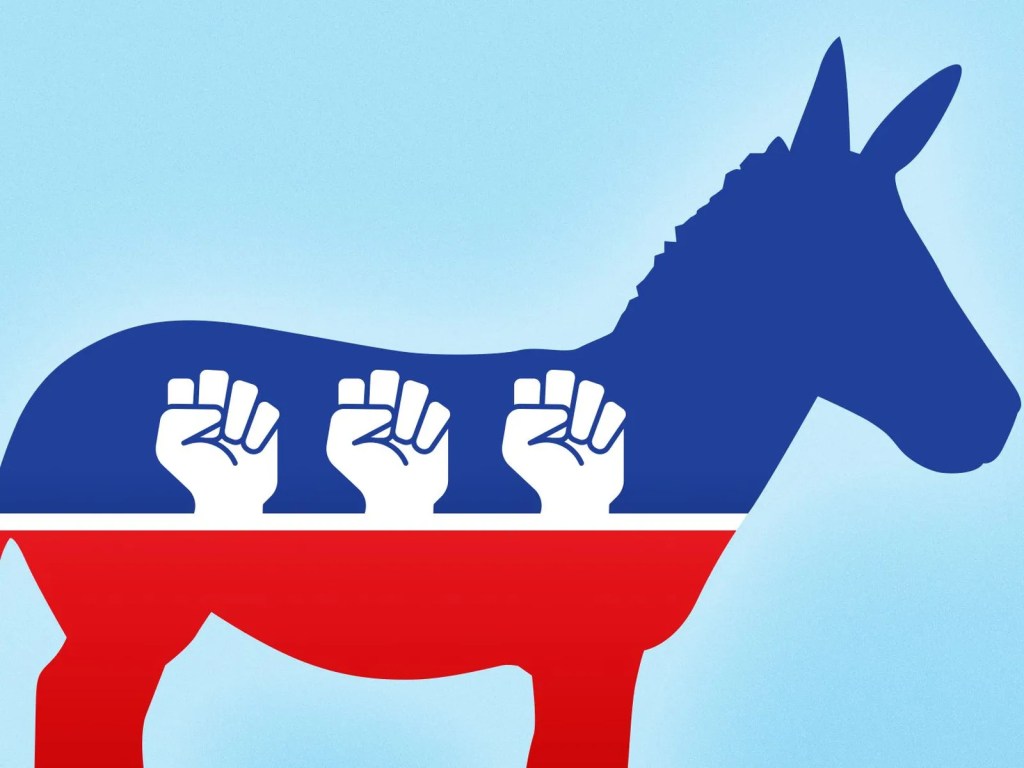
In a hypothetical scenario where the Democratic Party uses crises like drug addiction, homelessness, and crime across multiple states to secure federal funding and divert those funds toward political goals—such as election campaigns—this could represent a form of systemic corruption. If such a strategy existed, it would rely on perpetuating societal issues to justify continuous financial assistance, which could then be misused for political gain. Here’s how such a scenario could theoretically play out:
1. Perpetuating Crises for Federal Funding
- Ongoing Social Issues: In this hypothetical, the Democratic Party, particularly in states they govern, would benefit from allowing problems like homelessness, drug addiction, and crime to persist or worsen. The more severe these issues become, the more federal and state resources could be allocated for addressing them. However, rather than solving the problems, the funds would be redirected or mismanaged to ensure a steady stream of resources that can be manipulated for other purposes.
- Use of Disaster Declarations: As mentioned in the previous hypothetical scenario, recurring disaster declarations—whether for wildfires, housing crises, or public health emergencies—could open up opportunities for funneling federal aid. These funds, instead of being used effectively, could hypothetically be distributed to political allies, contractors, or entities that play a role in financing political campaigns.
2. Strategic Control Over Key States
- Repeating the Playbook in Major States: States with significant populations and economies, such as California, New York, and Illinois, where Democrats hold significant power, could be used as hubs for this strategy. By keeping social issues at a critical level in these states, there would be a constant need for federal intervention, creating an endless loop of funding that can be channeled into political machines. If this pattern were repeated across multiple states, it could become a powerful method of indirectly securing financial resources to maintain electoral dominance.
- Manipulating Voter Base: If these social crises disproportionately affect urban areas with large Democratic voter bases, the party could use this situation to secure loyalty among low-income or marginalized communities by presenting themselves as the solution to the very problems they help perpetuate. The strategy would involve ensuring that these communities remain dependent on state welfare programs, housing assistance, and healthcare systems, keeping them loyal voters in exchange for ongoing financial support.
3. Election Funding and Corruption
- Redirecting Government Funds: In this hypothetical, misallocated federal funds from emergency responses or state budgets could be funneled into election campaigns through politically connected contractors, consulting firms, or nonprofits that receive these funds to “address” homelessness, drug addiction, and crime. These organizations could then contribute back to political campaigns or spend the money on efforts that indirectly boost Democratic candidates, such as voter registration drives or advertising.
- Dark Money and Super PACs: Some of this money could flow into dark money groups or Super PACs that are not required to disclose their donors. In a corrupt system, these groups could use the redirected funds to finance Democratic candidates, effectively turning taxpayer money meant for public programs into resources for electoral advantage.
4. Controlling the Narrative
- Media and Messaging: If such a hypothetical system existed, it would rely on controlling the media narrative to ensure that these crises are seen as problems that only Democratic leaders can solve, while avoiding accountability for their persistence. Media outlets that align with Democratic interests could emphasize the need for more government intervention and downplay the idea that policies are failing or that funds are being misused.
- Blaming External Forces: In this scenario, the party might frame the crises as the result of external forces, such as systemic inequality, capitalism, or climate change, which they argue can only be solved through progressive policies and increased government spending. This would justify the continued funneling of federal money into these states while shifting blame away from policy failures.
5. Political Dependency on the Federal Government
- Federal Dependency for Election Wins: Hypothetically, if the Democratic Party were relying on this system, it would incentivize maintaining power by ensuring states and localities are financially dependent on federal aid. This could involve passing laws or implementing policies that exacerbate issues like housing shortages, drug dependency, or crime to increase the perceived need for federal intervention.
- Exploiting a Minority Support Base: Recognizing that they may not have broad national support, the party would focus on securing the votes of specific demographic groups that benefit from social programs, welfare, or government assistance. By continually positioning themselves as the “saviors” who provide these benefits, they can secure votes from those who rely on state aid, even if the system perpetuates the very issues it is designed to address.
6. Unintended Consequences
- Long-Term Economic Damage: If this strategy were being employed, it would have significant long-term consequences for the economy of states implementing it. Businesses would continue to flee high-tax, high-crime areas, as seen in California with companies like Tesla and Oracle relocating to more business-friendly states like Texas. This could further increase economic inequality in these regions, ironically exacerbating the very problems the party claims to be solving.
- Increasing Public Discontent: As crises persist without resolution, public trust in government could erode. While this might not immediately harm Democratic candidates in urban centers where they have strong support, it could weaken their position in more competitive states or swing districts. Over time, frustration with the lack of effective governance could lead to a backlash.
Conclusion:
In this hypothetical scenario, the Democratic Party would rely on maintaining a cycle of social crises and federal dependency across key states to secure funding for elections and maintain political power. By perpetuating issues like drug addiction, homelessness, and crime, they would ensure a steady flow of federal resources, which could be misused to support electoral campaigns. While this scenario is speculative, it highlights the potential dangers of systemic corruption if political parties were to exploit public crises for financial and electoral gain.




 Hypothetical Thinking
Leave a comment