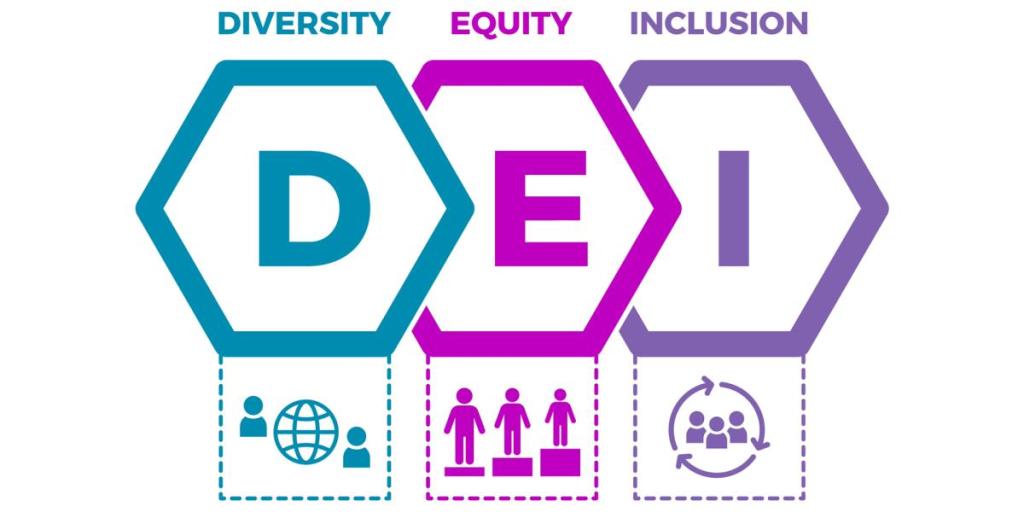
Evaluating the principles of Diversity, Equity, and Inclusion (DEI) in relation to socialist ideology involves understanding how both frameworks address social, economic, and political structures, particularly in how resources, opportunities, and power are distributed.
Core Tenets of DEI:
- Diversity: Emphasizes the importance of representation and inclusion of people from different backgrounds (race, gender, ethnicity, sexual orientation, etc.).
- Equity: Focuses on ensuring fair treatment and opportunities, recognizing that not everyone starts from the same place and may need different resources to achieve equal outcomes.
- Inclusion: Seeks to create environments where all individuals feel welcomed, respected, and empowered to participate fully.
Core Tenets of Socialism:
- Collective Ownership: Socialism advocates for the collective ownership of resources and means of production to ensure that wealth and power are distributed more equitably across society.
- Economic Equality: Socialism emphasizes reducing disparities in wealth and income, aiming for a more egalitarian society where resources are shared more evenly.
- Class Struggle: The socialist framework often highlights the struggle between the working class (proletariat) and the capitalist class (bourgeoisie), seeking to reduce class inequalities.
Key Comparisons:
- Resource Distribution:
- DEI: Focuses on redistributing opportunities (e.g., through affirmative action, anti-discrimination policies) to address systemic inequities, particularly for historically marginalized groups.
- Socialism: Involves the redistribution of material resources (wealth, land, capital) to achieve a more equitable society. While DEI seeks fairness in specific domains (workplace, education), socialism focuses on broad societal structures, aiming for systemic economic equality.
- Equity vs. Equality:
- DEI: Focuses on equity, which acknowledges that individuals have different needs and requires varied resources to achieve similar outcomes.
- Socialism: Emphasizes equality, typically in the sense of material wealth and class status. In a socialist system, the aim is to level economic playing fields, often assuming that similar access to resources will lead to similar outcomes.
- Power Dynamics and Inclusion:
- DEI: Strives for inclusive environments where all individuals, especially marginalized groups, can participate and thrive. It focuses on dismantling barriers caused by racism, sexism, ableism, and other forms of discrimination.
- Socialism: Seeks to eliminate class-based power imbalances by redistributing wealth and control over production. Inclusion, in this context, means ensuring that the working class has a say in decision-making, often through mechanisms like workers’ councils or democratic control of resources.
- Collective Good vs. Individual Opportunity:
- DEI: Seeks to balance the needs of individuals from diverse backgrounds within institutions by removing systemic barriers. It values individual experiences and promotes the idea that diversity strengthens collective environments (e.g., the workplace, schools).
- Socialism: Prioritizes the collective good, often requiring individuals to make sacrifices for the benefit of society as a whole. The individual’s role is largely framed within the context of their contribution to the collective welfare.
Differences in Approach:
- Economic Focus: Socialism is deeply rooted in the redistribution of economic resources and addressing class-based inequities. DEI, on the other hand, deals more with social justice in identity-based areas, though economic justice can be a component of its broader goals.
- Implementation: DEI is often implemented in capitalist societies through corporate or institutional policies, aiming to make workplaces and educational institutions more inclusive. In contrast, socialism advocates for systemic, often government-led, reforms to shift the entire economic structure.
- Capitalism vs. Systemic Change: DEI can coexist within a capitalist system and often works through market-based institutions. Socialism, in contrast, seeks to upend capitalism altogether, redistributing ownership and control over resources.
Conclusion:
While DEI and socialist ideology share a common goal of addressing systemic inequities and redistributing opportunities or resources, they do so through different lenses. DEI focuses on social identities (race, gender, etc.) and is largely applied within existing structures like corporate or educational systems, often within capitalist frameworks. Socialism addresses class-based inequities and seeks to transform the entire economic system to eliminate disparities.
Despite their differences, both approaches seek to create a more equitable and inclusive society, though their methods and focal points differ significantly.




 Hypothetical Thinking
Leave a comment