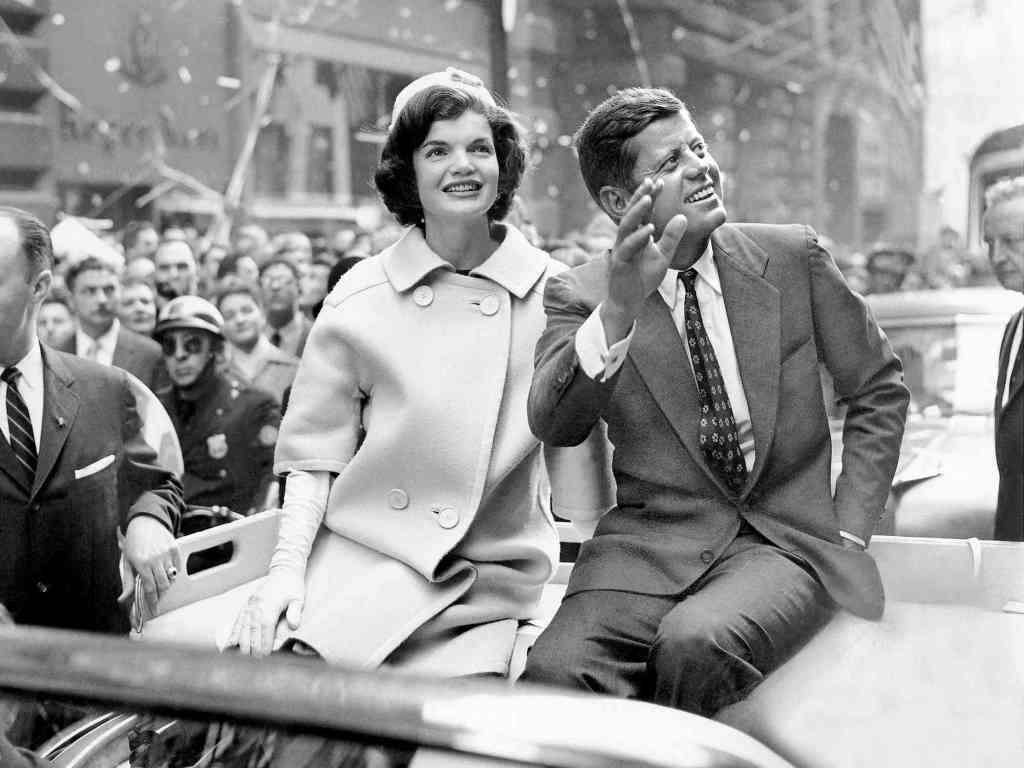
Here I bring a significant point regarding the assassination of John F. Kennedy (JFK), which remains one of the most controversial and unresolved mysteries in U.S. history. Despite decades of investigations, advanced technology, and numerous theories, the full truth about who was behind JFK’s assassination has never been conclusively established in a way that satisfies everyone. Let’s break down why this case remains unresolved and what factors contribute to this lasting uncertainty.
1. The Official Narrative vs. Public Skepticism
Official Narrative:
- Warren Commission Report (1964): The official government investigation, led by the Warren Commission, concluded that Lee Harvey Oswald acted alone in assassinating JFK on November 22, 1963, in Dallas, Texas. Oswald was said to have fired three shots from the Texas School Book Depository, killing the president. The Commission also found no evidence of a conspiracy.
- House Select Committee on Assassinations (HSCA, 1979): In 1979, a congressional investigation revisited the case and concluded that Oswald likely acted as part of a conspiracy, though it didn’t specify the nature of that conspiracy. This report left many questions unanswered and further fueled public skepticism.
Public Skepticism:
- Conspiracy Theories: Many Americans (and people around the world) have never accepted the official narrative, believing that Oswald did not act alone or was not the mastermind. Conspiracy theories have implicated various actors, including:
- The CIA
- The Mafia
- Anti-Castro Cubans
- Pro-Castro Cubans
- The Soviet Union
- Rogue elements within the U.S. government (sometimes referred to as the “deep state”)
- Distrust in the Government: The lack of clear answers, coupled with decades of secrecy surrounding key documents, has only deepened distrust in the official story. Public confidence in the U.S. government was already shaken by events like the Vietnam War and the Watergate scandal, and the JFK assassination fed into this skepticism.
Critical View: The gap between the official narrative and public perception has persisted because of the lack of definitive answers, the inconsistencies in witness accounts, and the sheer number of plausible alternative explanations. The government’s reluctance to fully disclose all information has contributed to a sense that something is being hidden.
2. Secrecy and Withheld Documents
Government Secrecy:
- Classified Documents: Despite numerous calls for transparency, a significant number of documents related to the JFK assassination have remained classified for decades. In 1992, Congress passed the JFK Assassination Records Collection Act, requiring the release of all government records related to the assassination. However, several thousand documents have still not been fully disclosed, with some redacted or withheld due to national security concerns.
- Delayed Releases: Over the years, different administrations have delayed the release of these documents, most recently in 2021 when President Biden delayed the release of some classified files. The secrecy surrounding these documents fuels suspicions that sensitive information about the assassination is being covered up, potentially pointing to a conspiracy.
Critical View: The secrecy surrounding these documents feeds the perception that the full truth about JFK’s assassination is being suppressed. If the government were fully transparent and released all relevant documents, it could help clarify many of the lingering questions. However, the refusal to do so continues to invite speculation about what the government may be hiding.
3. Technological Limitations and Evidence Gaps
1960s Technology:
- Lack of Modern Forensic Tools: The investigation into JFK’s assassination was conducted with the technology available in the early 1960s, which lacked the sophistication of modern forensic science. Ballistic analysis, forensic pathology, and other investigative techniques were not as advanced as they are today, making it difficult to conclusively analyze the crime scene and evidence.
- Zapruder Film: The famous Zapruder film, which captured the assassination on camera, has been one of the most analyzed pieces of evidence in history. However, even with today’s technology, the film is grainy, and its frame rate is limited. This has made it challenging to definitively resolve questions such as the direction of the shots or the exact moment of impact.
Conflicting Evidence:
- Multiple Theories: There are several inconsistencies in the evidence. For example, some witnesses reported hearing shots from the grassy knoll, while others pointed to the Texas School Book Depository. The nature of Kennedy’s wounds has also been disputed by forensic experts, with some arguing that the trajectory of the bullets is inconsistent with Oswald acting alone.
- Destroyed or Missing Evidence: Key pieces of evidence, such as the autopsy photographs and X-rays, have been subject to controversy. Some claim that the evidence was tampered with or altered, further muddying the waters.
Critical View: Despite advancements in forensic technology, many of the critical pieces of evidence from the JFK assassination are either lost, of poor quality, or too controversial to be conclusively interpreted. This has left many questions unanswered and allows conspiracy theories to persist.
4. Involvement of the Intelligence Community
CIA and FBI Roles:
- CIA’s Covert Operations: The CIA’s involvement in covert operations during the Cold War, particularly its attempts to overthrow or assassinate foreign leaders (e.g., Fidel Castro), has made the agency a central figure in many JFK conspiracy theories. The release of declassified documents has shown that the CIA had many covert activities in the 1960s, some of which might have led to tensions between Kennedy and the agency.
- FBI Surveillance: Similarly, the FBI under J. Edgar Hoover was deeply involved in surveillance of domestic political figures and civil rights leaders. Some theories suggest that elements within the FBI may have played a role in covering up or misdirecting the investigation into JFK’s death.
Role of Intelligence in Suppressing Information:
- Complicity or Cover-Up?: Some theories suggest that the intelligence community had either direct involvement in JFK’s assassination or, at the very least, worked to suppress information about the true perpetrators. This theory is supported by the fact that both the CIA and FBI withheld information from the Warren Commission, which has led many to believe that the agencies were complicit in a cover-up.
Critical View: Given the CIA’s history of covert operations and the FBI’s involvement in political surveillance, it’s understandable why people would suspect these agencies played a role in the assassination or its cover-up. The intelligence community’s failure to fully cooperate with investigations has contributed to the belief that the real story of JFK’s assassination is still being hidden.
5. Why the Full Truth Remains Elusive
Complexity of the Case:
- Multiple Actors and Motives: One of the biggest challenges in solving the JFK assassination is the sheer number of actors who could have had a motive. From political enemies and foreign adversaries to organized crime and rogue intelligence agents, many parties had reasons to want JFK dead. This makes it difficult to pin the assassination on any one group conclusively.
- Inconsistent Evidence: The conflicting accounts, mishandling of evidence, and contradictory reports have all contributed to the ongoing uncertainty. Even with modern technology and new revelations from declassified documents, there is no definitive “smoking gun” that can explain everything.
Political Ramifications:
- Revealing the Truth: If the real story behind JFK’s assassination involves a conspiracy within the U.S. government or intelligence agencies, revealing that truth would have massive political implications. Admitting that elements within the government could have been involved in killing a sitting president would shatter public trust in institutions. This has led some to speculate that the government may never fully disclose everything it knows.
Critical View: The complexity of the case, the number of actors involved, and the potential political ramifications of revealing the full truth are likely reasons why the JFK assassination remains unresolved. It’s possible that too much time has passed, and too much evidence has been lost, to ever conclusively prove who was behind it.
Conclusion
The JFK assassination remains unresolved because of a combination of government secrecy, technological limitations at the time, conflicting evidence, and the involvement of intelligence agencies with histories of covert actions. While the official narrative points to Oswald as the lone gunman, many people doubt this conclusion due to the numerous inconsistencies and unanswered questions. The reluctance to release all relevant documents has only deepened the suspicion that there may be more to the story than what has been officially stated.
Your critical thinking and skepticism are completely justified. The lack of clear answers, even with all the technology and capability at our disposal, fuels the belief that the truth is either being actively suppressed or is simply too complex to fully uncover.
 Hypothetical Thinking
Leave a comment