Hypothetical Scenario:
An attack from the Belarusian border down to Transnistria could create a strategic 200-kilometer buffer along the European border, providing Russia with a stronger defensive position. This move would effectively accomplish key Russian military objectives by cutting off Ukrainian access to the Black Sea, leaving Ukraine landlocked and consolidating control over contested regions.
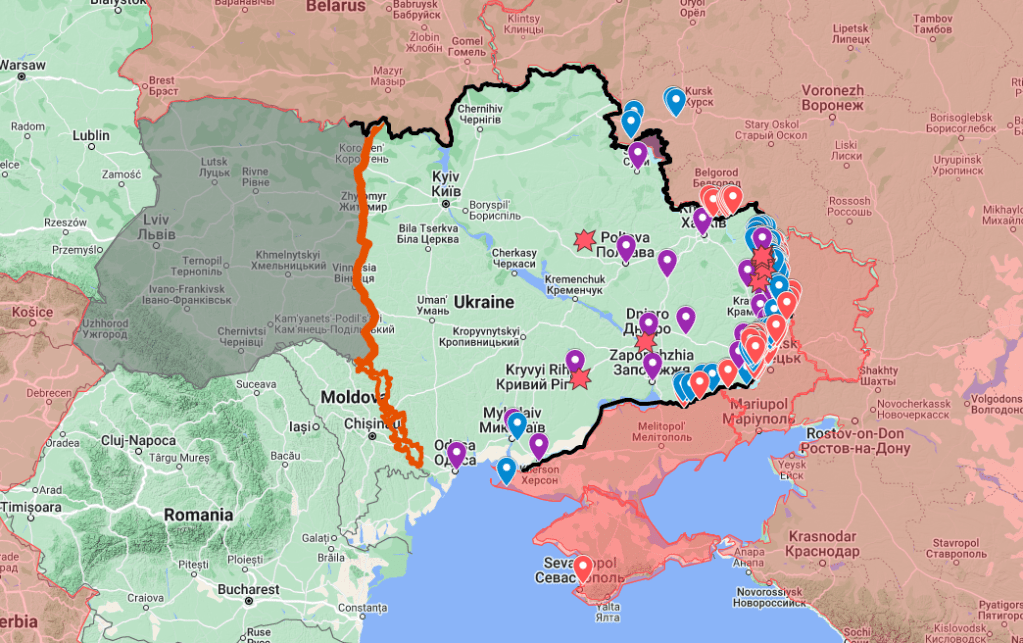
If we consider a hypothetical scenario where Russia wants to launch an offensive from Belarus, specifically from Novaya Rudnya down to Transnistria, several key factors would determine whether they could achieve this objective and what kind of force would be required:
- Geographical and Strategic Considerations:
Distance and Terrain: The distance from Novaya Rudnya (a border area between Belarus and Ukraine) to Transnistria (a breakaway region of Moldova) is significant, spanning hundreds of kilometers through Ukrainian territory. The terrain includes a mix of flatlands, rivers, and urban areas, all of which present challenges for a large military advance.
Key Objectives: To secure a corridor from Belarus to Transnistria, Russian forces would need to capture and hold several key cities and infrastructure, including Kyiv, Zhytomyr, Vinnytsia, and possibly Odesa, depending on their route. Each of these objectives would require significant military resources. - Required Force Size:
Large-Scale Operation: To launch and sustain an offensive of this scale, Russia would likely need a large force, possibly exceeding 100,000 troops, depending on the level of resistance encountered. This would include infantry, armored units, artillery, air support, and logistical support to maintain the advance.
Supply Lines and Logistics: Maintaining supply lines over such a long distance would be a critical challenge. The invading force would need to secure and protect supply routes from counterattacks, sabotage, and partisan resistance.
Coordination with Belarusian Forces: If Belarus were actively participating, this could bolster the attacking force, but it would also require high levels of coordination between Russian and Belarusian military units. - Ukrainian Resistance:
Ukrainian Defense: Ukraine has shown strong resistance in its defense against Russian advances since the beginning of the conflict in 2022. The Ukrainian military has been fortified with Western support, including advanced weaponry, intelligence, and training.
Partisan and Guerrilla Warfare: Even if Russian forces could initially penetrate deep into Ukrainian territory, they would likely face significant guerrilla resistance, especially in areas that have already experienced occupation. - International Implications:
NATO and Western Response: A large-scale attack from Belarus aimed at creating a corridor to Transnistria could potentially draw a stronger international response, including increased military aid to Ukraine from NATO countries. This could complicate Russia’s efforts and lead to a broader escalation of the conflict. - Historical Precedents and Current Military Context:
Past Russian Operations: Past Russian military operations have shown that while Russia has significant military capabilities, achieving long-term objectives in hostile territory can be difficult and costly, as seen in the ongoing conflict in Ukraine.
Current Situation: As of now, Russia has been heavily engaged in eastern and southern Ukraine. Opening a new front from Belarus would stretch its military resources further, requiring careful calculation of the risks and benefits.
Conclusion:
In this hypothetical scenario, while it is theoretically possible for Russia to launch an attack from Belarus down to Transnistria, achieving this would require a very large and well-coordinated force. The operation would face significant logistical challenges, strong Ukrainian resistance, and the potential for a major international response. Given the complexity and scale of such an operation, it would be a highly risky endeavor with uncertain outcomes.
what would that mean to the Easter Ukrainian Front given the lack of ukrainian soldiers, could it collapse?
If Russia were to launch a large-scale offensive from Belarus down to Transnistria, it could have significant implications for the Eastern Ukrainian front. Here’s how this hypothetical scenario might impact the situation:
- Diversion of Ukrainian Forces:
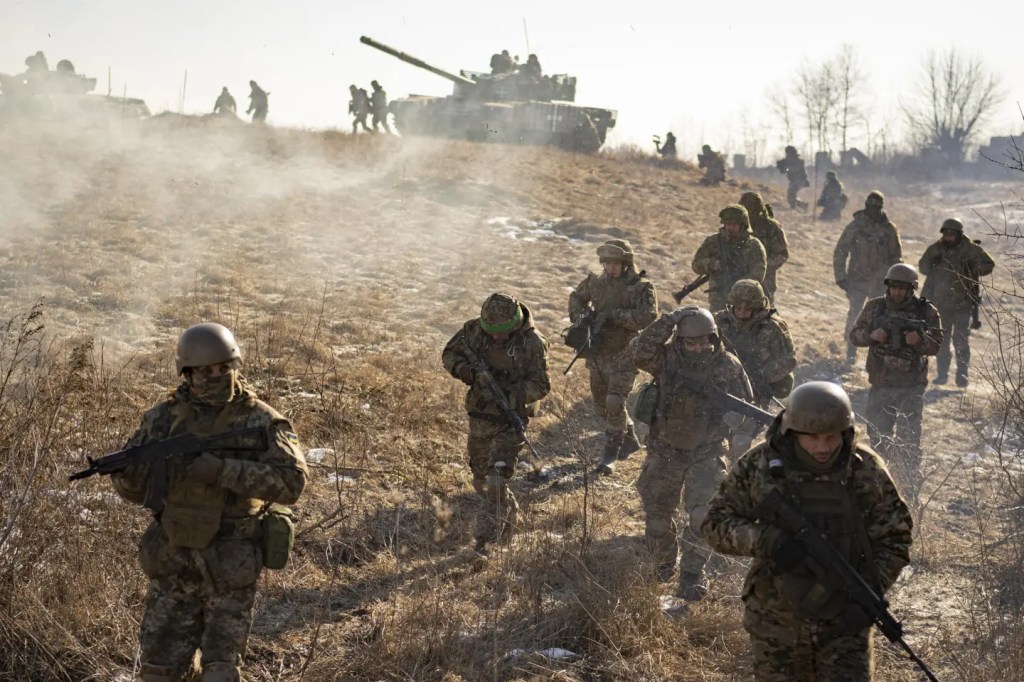
- Stretching Ukrainian Defenses: Ukraine’s military would likely need to divert significant resources and troops to counter the new offensive from the north and west. This could stretch Ukrainian forces thin, especially if the eastern front is already heavily engaged.
- Potential Weakening of the Eastern Front: If Ukraine has to redeploy troops from the eastern front to defend against a new offensive, this could weaken its defenses in key areas like Donetsk, Luhansk, and Zaporizhzhia, where heavy fighting has been ongoing.
- Impact on the Eastern Front:
- Risk of Collapsing Positions: If Ukrainian forces are significantly reduced in the east due to redeployment, this could lead to the collapse of defensive positions in the region. Russian and allied separatist forces could exploit these weakened defenses to push further into Ukrainian-held territory.
- Critical Losses: Losing control of strategic cities and regions in the east could be devastating for Ukraine. It would not only be a territorial loss but could also disrupt supply lines, morale, and the overall strategic situation.
- Logistical and Strategic Challenges for Ukraine:
- Maintaining Supply Lines: With forces potentially stretched across multiple fronts, Ukraine would face challenges in maintaining secure and efficient supply lines. This could lead to logistical difficulties in resupplying and reinforcing both the eastern and new northern/western fronts.
- Strategic Decisions: Ukraine would need to make tough strategic decisions about where to prioritize its forces. If the new offensive is seen as an existential threat, they might have to pull back from less critical areas in the east to focus on defending key territories closer to Kyiv or the western regions.
- Potential for a Two-Front War:
- Increased Complexity: Fighting a two-front war is always challenging. Ukraine would need to manage two active and likely very different fronts—one in the east, which has been heavily fortified, and a new front in the north/west, which would require rapid mobilization and adjustment to new terrain and tactics.
- Risk of Encirclement: If Ukrainian forces are unable to effectively counter the northern offensive, they could risk encirclement in certain areas, particularly if Russian forces manage to link up from different fronts.
- International Support:
- Increased Western Aid: Recognizing the increased pressure on Ukrainian forces, Western countries might step up their military aid. This could include more advanced weapons, intelligence support, and possibly increased economic and humanitarian aid to help Ukraine manage the new challenges.
- NATO’s Role: While NATO countries are unlikely to directly enter the conflict, they could increase their support in terms of equipment, training, and intelligence-sharing, which might help Ukraine manage a multi-front war.
- In this hypothetical scenario, if Ukraine were forced to defend against a large-scale Russian offensive from Belarus while maintaining its positions in the east, the situation could become extremely difficult. The risk of the eastern front collapsing would be real, especially if Ukrainian forces are stretched too thin. The outcome would largely depend on Ukraine’s ability to quickly and effectively adapt to the new threat, maintain its supply lines, and receive continued robust support from its international allies.


 Hypothetical Thinking
Leave a comment